How Screw Pile Foundations Perform in Canadian Soil Conditions
Effective foundations are essential for the stability and longevity of any building. When using screw pile foundations, correct installation depends on a soil analysis that identifies the type of soil and defines the characteristics needed for the installation.
Soil types in Canada can be particularly challenging when constructing any type of foundations. Winters can bring extremely low temperatures that freeze the soil for long periods and permafrost is experienced in northern regions. Many parts of Canada can also have clay soils that bring their own challenges.
Screw Pile Foundations in Frozen Ground
When water freezes it expands, so water-laden soil experiences a process known as frost heave that can lift foundations. When the water in soil thaws, it contracts and can create gaps that compromise the stability of foundations. This constant freezing and thawing cycle can cause concrete foundations to move out of alignment, resulting in cracks and tilting that require repair. Laying concrete foundations in freezing conditions is also difficult, with the likelihood of extended curing times and reduced strength.
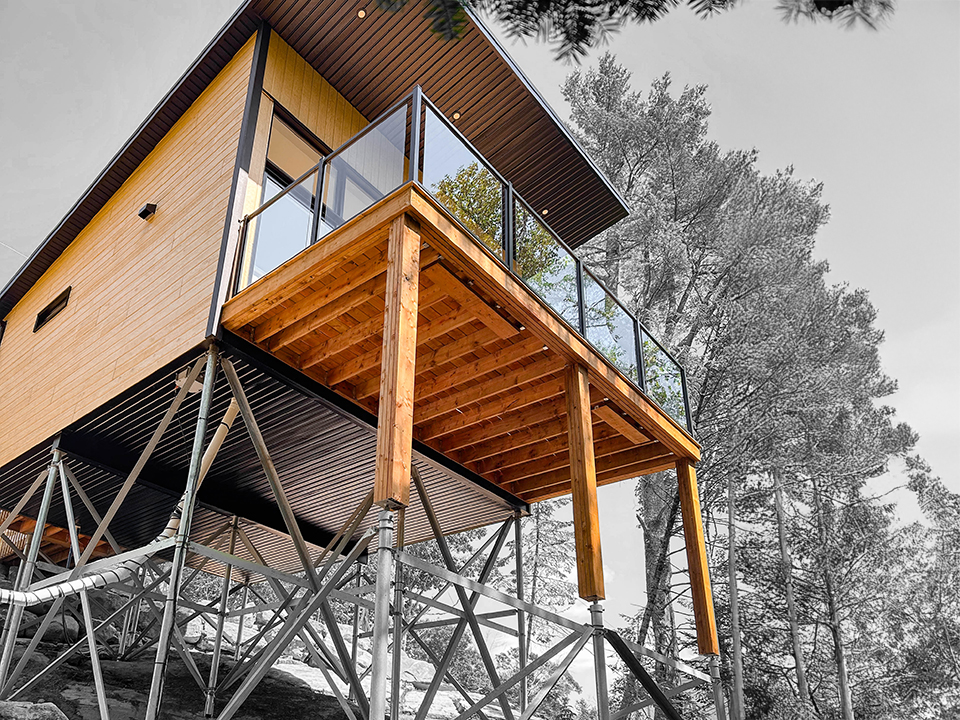
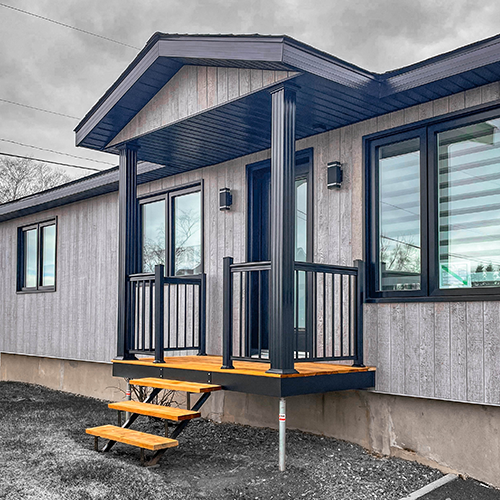
Whereas concrete foundations are quite shallow, screw piles go deep into the ground, below frost depth and into stable soil, so they are not affected by movements caused by freeze/thaw cycles. Their screw-like design means they are anchored securely into the ground, and they can be installed in even the coldest of conditions.
Frozen ground requires special treatment to allow for the settlement and movement. Screw piles must be installed deep enough and require treatment to prevent corrosion.
Screw Pile Foundations in Clay Soil
A large proportion of Canada has clay soil, and this presents particular challenges. Clay soil is very dense and retains water, so it expands when wet and contracts as it dries, causing concrete foundations to shift and crack.
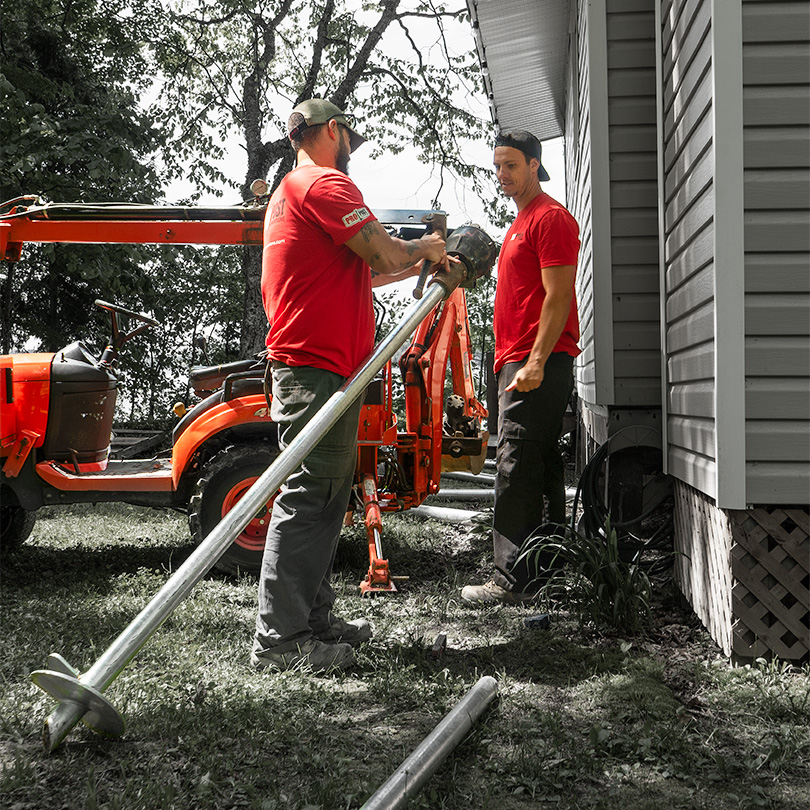
Screw piles go deeper into the ground than concrete foundations and so are not affected by soil shifts. In fact, clay gives excellent grip for the helical blades of a pile and provides lateral stability.
Installing foundations on clay soil affects the design of the screw piles. Larger diameter shafts with thick walls and correct helix sizing and spacing are necessary for effective use and proper load distribution. All steel components must be galvanised to prevent corrosion in moisture-retaining clay.
Effective Installations for all Soil Types
All Pro Post Foundations screw piles are specifically designed and installed for the required load and type of soil where they are used. They are quicker to install than concrete foundations, reduce overall costs, create less disruption and are effective in all conditions as well as being durable and very long-lasting.
All our screw pile installations comply with the National Building Code of Canada, conforming to required depths and torque thresholds. Every component is fully engineered to meet load requirements and soil conditions so you can be sure your building is stable and secure. For a fast and effective start to your construction project whatever the challenges, get in touch today.